|
| OBJECTIVE: TO WRITE OR TYPE A LETTER | ||||||||||||||
| TOOL(S) OR APPLICATION USED TO TYPE LETTER |
 |
 |
 |
 |
 |
 |
 |
|||||||
 |
HAND WRITTEN |
|
ROYAL TYPEWRITER |
|
IBM SELECTRIC TYPEWRITER |
|
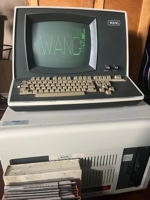
WANG WORD PROCESSOR |
|
COREL/IBM'S WORD PERFECT; MICROSOFT WORKS; MICROSOFT OFFICE; APPLEWORKS |
|
VOICE ACTIVATED SOFTWARE |
|
ARTIFICIAL INTELLIGENCE |
|
| "PROCESS" TO PRODUCE LETTER |
Performed manually with either hand or feet with only a pencil or pen; no other mechanism or tools required. No automated spell-check; graphics and photos can only be added with paste, glue, tape, etc. |
Non-electrical machine requires physical dexterity in both hands to most efficiently manipulate individual keys; white-out or correction tape (film) is required to correct typograhical and grammatical errors; graphics and photos can only be added to typed page with paste, glue, tape, etc. |
Electrical machine requires physical dexterity in both hands to most efficiently manipulate individual keys; white-out or correction tape (film) is required to correct typograhical and grammatical errors; graphics and photos can only be added to printed page with paste, glue, tape, etc. |
Electrical machine requires physical dexterity in both hands to |
Electrical machine requires physical dexterity in both hands to most efficiently manipulate individual keys. On-screen instant editing and spell-check eliminates requirement of white-out or correction tape (film) to correct typograhical and grammatical errors. Option now exists to add graphics and photos into text documents prior to printing. |
Human voice activated, dictation-based recording, with on-screen visual editing and spell-check; plus voice command of data directly into spreadsheets and presentation software; but does not natively edit, draw, or manipulate graphics, photos, and videos. |
Human voice activated, or text-based, or self-generated AI content, to incliude editing, drawing, or manipulation of graphics, photos, and video content. | |||||||
| EDUCATION | No formal education is required. | No formal education is required. | No formal education is required. | No formal education is required. | No formal education is required. | No formal education is required. | No formal education is required. | |||||||
| EXPERIENCE | No work related experience is required. | No work related experience is required. | No work related experience is required. | No work related experience is required. | No work related experience is required. | No work related experience is required. | No work related experience is required. |
|||||||
COMPLEXITY
The |
No independent decisions are required. Work process and procedures are largely predetermined. Minimal problem-solving is necessary. • Little possibility of loss. Errors are easily detected. |
Frequent minor decisions are required. Work requires planning a sequence of operations where standard, generally applied procedures are available. Some infrequent problem-solving, defined within the scope of the position, is necessary. • Easy to avoid errors, that might not be detected, but work is subject to occasional spot-checks. |
Frequent minor decisions are required. Work requires planning a sequence of operations where standard, generally applied procedures are available. Some infrequent problem-solving, defined within the scope of the position, is necessary. • Easy to avoid errors, that might not be detected, but work is subject to occasional spot-checks. |
Frequent minor decisions are required. Work requires planning a sequence of operations where standard, generally applied procedures are available. Some infrequent problem-solving, defined within the scope of the position, is necessary. • Easy to avoid errors, that might not be detected, but work is subject to occasional spot-checks. |
Frequent minor decisions are required. Work requires planning a sequence of operations where standard, generally applied procedures are available. Some infrequent problem-solving, defined within the scope of the position, is necessary. • Easy to avoid errors, that might not be detected, but work is subject to occasional spot-checks. |
Frequent minor decisions are required. Work requires planning a sequence of operations where standard, generally applied procedures are available. Some infrequent problem-solving, defined within the scope of the position, is necessary. • Easy to avoid errors, that might not be detected, but work is subject to occasional spot-checks. |
No independent decisions are required. Work process and procedures are largely predetermined. Minimal problem-solving is necessary. • Little possibility of loss. Errors The advent of "email" significantly reduced the number of postal letters. Likewise, A.I. will prompt "letter writing" to become obsolete. |
|||||||
Technology does NOT necessarily make "tasks" more complex, as the use of such can significantly reduce or completely eliminate all complexity, all physical effort, all intellectual effort - making entire functions or industries OBSOLETE. For example, "Siri, write and print a one-(1) page at-will termination letter to John Doe terminating his employment effect October 10, 2026." |
||||||||||||||
| PERCEIVED IMPACT OF EDUCATION | ||||||||||||||
Having been immediately responsible for all employee compensation, including teachers, at the 35th (Denver, Colorado) largest public school district in the U.S., and having worked in administration at an elementary school at the 3rd (Chicago, Illinois) largest K-12 public school distrist in the U.S., okay, I get it. Any discussion about K-12 public school teachers often becomes an emotional subject for some, for many people. Why all the emotion?
Let's not be sexist and blame estrogen, because most of the teachers within a K-12 public school environment are female. Oh, no, that's ridiculous. Sadly, far too many people give K-12 teachers the same kind of reverance stereotypically given to some first-responders (police, fire and rescue, etc.), veterans, (some) clergy, social workers, etc. Sadly, far too many people become overtly emotional about K-12 teachers and are unable to take a totally objective assessment of this profession. In this regard, consider the following linear, fact-based assessment.
There's a really good reason why thousands of K-12 public school teachers leave their profession; and no, it's not because teachers are underpaid. Actually, given the "actual market value" of the character and scope of actual "work" teachers perform, teachers are adequately paid or overpaid. Yeah, I said it, teachers are overpaid. Of course, you can ignore my assessment, but why don't you conduct a linear, objective, fact-based assessment of a typical K-12 public school teacher using the same point-factor "job evaluation" tool common to human resource professionals?
First, as posted at Omaha Public Schools, here's the (extremely poorly written) job description for a Teacher, Elementary K-6:
Position Purpose: Plans for, teaches, and facilitates learning for all students. Creates a positive learning environment. Maintains academic progress, records, and discipline. Works collaboratively with students, parents and staff to provide and implement classroom education to meet the needs of all students.
Knowledge, Skills, and Abilities: (Essential Job Functions)
1. Education: Minimum of Bachelor’s degree in education from an accredited college or university.
2. A valid NE Teaching Certificate or the ability to obtain one with appropriate endorsement(s).
3. A demonstrated philosophy that all students can and will learn.
4. Excellent attendance record.
5. Excellent communication skills oral and written.
6. Demonstrated knowledge and understanding of Best Instructional Practices.
7. Positive interpersonal skills.
8. Professional verification of successful classroom teacher performance and/or student teaching experience.
9. Evidence of the willingness and the ability to comply with the standards for ethical and professional performance established by the State Board of Education.
10. This individual will exhibit skills pertinent to foster positive human relationships and the ability to work effectively with students, staff, parents and the community.
11. A willingness and demonstrated abilities conducive to a continuous quest for quality education.
12. Developing students’ cognitive capacity and respect for learning.
13. Positively fostering students’ self-esteem.
14. Working with and understanding a diverse student population.
15. Integration of leadership, technology, and communication in to the curriculum.
16. Planning for and guiding the learning process to help student achieve program objectives.
17. Maintaining an atmosphere conducive to learning. Implementing useful diagnostic and progress assessment measures.
18. Selecting and using effective instructional methods and learning materials.
19. Establishing a cooperative relationship with all assigned students.
20. Maintaining open lines of communication with parents, guardians and staff.
21. Engaging in professional growth activities through an ongoing program of job related knowledge and skill development.
22. Working collaboratively to achieve the overall purpose of the school’s program and support the District’s vision, aims and goals.
23. Integrating the themes of leadership, technology, and communication with a diverse population.
24. Performs other related tasks as assigned by the Principal and other central office administrators as designated by the Superintendent.Equipment: This position may require the ability to use SMART boards and iPads in addition to basic office equipment such as computers, copiers, scanners, and fax machine. Must always comply with OPS’s guidelines for equipment use.
Travel: Limited travel may be requested.
Physical and Mental Demands, Work Hazards: Must be able to respond rapidly in emergency situations Must have organization, time management, communication, and interpersonal skills Work in school building environments
Interrelations: Contact with personnel within the district and other stakeholders Will be working under the direct supervision of the building administration in order to complete day to day tasks Will be working with a diverse population requiring the ability to handle all situations with tact and diplomacy Must understand and respond appropriately to stakeholder needs and maintain a positive attitude with all Expected to interact with all internal and external stakeholders in a friendly, professional manner and provide quick, responsive service
Employee Punctuality and Appearance In order for schools to operate effectively, employees are expected to perform all assigned duties and work all scheduled hours during each designated workday, unless the employee has received approved leave. Any deviation from assigned hours must have prior approval from the employee’s supervisor or building administrator. All employees are required to report to work dressed in a manner that reflects a positive image of Omaha Public Schools and is appropriate for their position.
Terms of Employment: This position is treated as a full-time exempt certified position. The terms of your employment will be governed by applicable state laws regulating employment or teaching in a Nebraska public school and Board of Education policies, as those laws and policies may change from time to time, and the Teacher Contract. If your position is represented by a collective bargaining representative, then your employment will also be governed by a negotiated agreement between OPS and that collective bargaining representative.
Terms of employment are contingent upon: Verification of a valid Nebraska Teaching License or other required license. A background check which demonstrates background is acceptable for the position sought and working with or around students. Verification of U.S. Citizenship or legal authorization to work in the United States. Successful completion of a tuberculosis skin test (if required by federal law for your position). Execution and delivery to OPS of a Teacher Contract presented by OPS.Perhaps, you're impressed by the aforementioned, but for an objective assessment you must ask the following question, "How does this 'job' compare to the great diversity of "jobs" in other industries of less or greater complexity?" Likewise, how does this job compare to similar jobs that also perform teaching, training, or instruction, but without:
[1] representation of a local and/or national bargaining group (union);
[2] a national lobbying organization (N.E.A., AFT, etc.);
[3] a state-mandated attendance requirement that ensures a captive audience (customers);
[4] an unlimited revenue source (homeowner taxes, sales tax, utility tax, bonds, etc.), and
[5] a vocation that perpetuates the status quo of its existence through an incestuous bureaucracy and by prohibiting independent thinking to achieve targeted business unit objectives?
Second, for the sake of consistency, we'll objectively "evaluate" the Teacher, Elementary K-6 position using the following generic factors common to most "non-management level" point-factor job evaluation plans: education; experience; scope of decision making / job complexity; financial complexity; impact of errors; communications; responsibility for others; and working conditions. In a point-factor evaluation system, numerical points of increasing value are assigned to each level within the hierarchy, and "all" positions are evaluated under the same hierarchy. Again, keep in mind, "job evaluation plan," is an objective assessment of position worth, internal equity, and external competitiveness bereft of and does not get lost in minutia, fads, or hyperbole designed to inflate the perceived complexity or worth of proposed departmental re-organizations, individual jobs, position hierarchy, or technology.ASSESSMENT:
 1. EDUCATION 1. EDUCATION |
Points |
Teacher, Elementary K-6 |
Corporate Instructor I / Trainer I |
|
| 1. | No formal education is required.
|
6 |
6 (Home School) |
|
| 2. | Special, short-term training lasting no more than 6 months. |
8 |
||
| 3. | High School (HS) Diploma, GED or graduation/certification from a vocational school. |
27 |
||
| 4. | HS/GED and approximately 1 year (+/-) of specialized training. |
40 |
||
| 5. | An Associates Arts (A.A.) Degree is required; or Journeyman license, vocational/technical certification/licensure. |
80 |
||
| 6. | A Bachlor of Arts (B.A.) Degree is required; or Masters license, vocational/technical certification/licensure.
|
120 |
120 |
120 |
| 7. | A Master of Arts or Masters of Business (M.A. or M.B.A.) Degree is required. |
150 |
||
| 8. | A Doctorate (Ph.D, J.D., etc.) Degree is required. | 175 |
||
| 2. EXPERIENCE |
Points |
Teacher, Elementary K-6 |
Corporate Instructor I / Trainer I |
|
| 1. | No work related experience is required. |
10 |
10 (Also Home School) |
10 |
| 2. | Less than one (1) year. |
40 |
||
| 3. | One (1) to three (3) years of work related experience. |
65 |
||
| 4. | Three (3) to five (5) years of work related experience. |
90 |
||
| 5. | Five (5) to seven (7) years of work related experience. |
120 |
||
| 6. | Seven (7) to ten (10) years of work related experience. |
155 |
||
| 7. | Ten (10) or more years of work related experience. | 170 |
||
| 3. SCOPE OF DECISION MAKING and JOB COMPLEXITY |
Points |
Teacher, Elementary K-6 |
Corporate Instructor I / Trainer I |
|
| 1. | No independent decisions are required. Work process and procedures are largely predetermined. Minimal problem-solving is necessary.
|
31 |
31 |
KEEP IN MIND: FLSA Exempt Auto Claims Examiner I's have more responsibility for decision making and job complexity than an Elementary K-6 classroom teacher. |
| 2. | Frequent minor decisions are required. Work requires planning a sequence of operations where standard, generally applied procedures are available. Some infrequent problem-solving, defined within the scope of the position, is necessary.
|
62 |
62 (Home School) |
62 |
| 3. | Decisions require considerable initiative and judgment. Requires planning unusual or difficult work where only general operational methods exist. Routine, regular, consistent problem-solving is necessary to resolve general to complex situations. Ability to recommend, and when approved by superiors, authority to implement policies, procedures, methods and practices.
|
124 |
||
| 4. | Decisions are required under widely varying conditions where considerable initiative, ingenuity and judgment are required. Requires planning work of a highly complicated nature where only general operational methods exist. Complex thinking to resolve unique, unstructured and original situation(s) is required. Authority to establish or revise policies, methods and procedures that impact the incumbent’s (this position) and other departments.
|
217 |
||
| 5. | Decisions are produced solely and completely independent of any prior review, input, immediate feedback, or evaluation from direct or indirect management. Wide discretionary thinking to resolve complex, constantly unique, unstructured and original situation(s) is required. Requires planning work of an extremely complicated nature where general operational methods do NOT exist. Authority to establish broad policies impacting any department, subject only to approval/denial by a department head, Cabinet member, or the Board of Education.
|
280 |
||
| 4. FINANCIAL RESPONSIBILITY & COMPLEXITY |
Points |
Teacher, Elementary K-6 |
Corporate Instructor I / Trainer I |
|
| 1. | Work is repetitive, no financial work is performed.
|
0 |
KEEP IN MIND: FLSA Exempt Accountant I's have more responsibility for financial work than an Elementary K-6 classroom teacher. |
|
| 2. | Work is repetitive, requiring no changes in format. |
6 |
6 |
|
| 3. | Work is repetitive, requiring few changes in format. |
23 |
||
| 4. | Work is repetitive, often involving coordination of money or financial data, requiring minor changes in format or calculations. |
41 |
||
| 5. | Work is repetitive, often involving coordination of money or financial data, requiring moderate and routine changes in format or calculations. |
59 |
59 (Home School) |
59 |
| 6. | Work is repetitive, often involving coordination of money or financial data, requiring major and constant changes in format or calculations. |
77 |
||
| 7. | Work is occasionally and moderately diverse, often involving large sums of money or financial data, requiring occasional changes in format or calculations. |
95 |
||
| 8. | Work is routinely diverse, involves regular changes in format, calculations, and input of similar accounting and financial data, financial applications, spreadsheets, operating systems, and proprietary financial systems. |
118 |
||
| 9. | Work is very diverse, involving frequent changes in format, calculations, and input of similar and dissimilar accounting and financial data, financial applications, spreadsheets, operating systems, and proprietary financial systems. |
148 |
||
| 10. | Work is extremely diverse, involving constant and major changes in format, calculations, and input of similar and dissimilar accounting and financial data, financial applications, spreadsheets, operating systems, and proprietary financial systems. | 180 |
||
| 5. IMPACT OF ERRORS |
Points |
Teacher, Elementary K-6 |
Corporate Instructor I / Trainer I |
|
| 1. | Essential duties can be performed with little chance of error.
|
8 |
8 |
KEEP IN MIND: FLSA Exempt Software Engineers have a greater risk of error AND greater difficulty locating and correcting errors (including cost impact) than an Elementary K-6 classroom teacher. |
| 2. | Errors might have moderate impact but are easy to avoid through routine spot-checks. |
15 |
15 (Home School) |
15 |
| 3. | Errors might have significant impact and require constant spot-checks to avoid. |
33 |
||
| 4. | Errors have significant impact and accuracy is fairly difficult to maintain. |
43 |
||
| 5. | Errors have major impact, accuracy is difficult to maintain, constant close attention is required to avoid errors. | 50 |
||
| 6. COMMUNICATIONS |
Points |
Teacher, Elementary K-6 |
Corporate Instructor I / Trainer I |
|
| 1. | Essential duties can be performed with minimal internal/external communications. No confidential information is at risk. |
10 |
10 (Home School) |
KEEP IN MIND: FLSA Exempt HIPAA Compliance Specialists have greater responsibility for critical inquiries, complaints, confidential information, and actual negotiations, than an Elementary K-6 classroom teacher. |
| 2. | The routine giving and receiving of information is required. Confidential information is at minimal risk and can be secured through routine security and spot-checks.
|
35 |
35 |
|
| 3. | Handling, coordinating, or performing as a liaison to specific inquiries, complaints, confidential information, and maintaining goodwill is required. Confidential information is at moderate risk and effective controls must exist or be created to limit access to sensitive information. |
65 |
65 |
|
| 4. | Resolving critical inquiries, complaints, negotiations, confidential information, and developing and maintaining effective relations is required. Failure to limit access to information and maintain confidentiality might result in controversy or litigation. |
60 |
||
| 5. | Resolving major inquiries, complaints and negotiations which have, are or will result in media controversy or litigation is required. Maintaining confidential information is absolutely critical and is a high priority. | 120 |
||
| 7. RESPONSIBILITY FOR OTHERS |
Points |
Teacher, Elementary K-6 |
Corporate Instructor I / Trainer I |
|
| 1. | Position (employee incumbent) is responsible solely for their own work. |
3 |
KEEP IN MIND: There are literally thousands of FLSA Exempt positions directly responsible for regular customer or client contacts involving more than 21.6 clients per day, including Nurses, Long-Term Care Specialists, Nutritionists, Physical Therapists and Occupational Therapists, Sales and/or Service Representatives, HR Specialists, Personal Bankers, Accountants, and many, many more positions that have greater responsibility for others than an Elementary K-6 classroom teacher. |
|
| 2. | Indirectly responsible, by providing technical direction or guidance, for the work of one (1) to three (3) subordinate employees or peers. |
5 |
5 |
|
| 3. | Directly responsible for supervising/managing the work of one (1) to three (3) subordinate employees. |
11 |
||
| 4. | Indirectly responsible, by providing technical direction or guidance, for the work of four (4) to ten (10) subordinate employees or peers. |
16 |
||
| 5. | Directly responsible for supervising/managing the work of four (4) to ten (10) subordinate employees. |
24 |
||
| 6. | Indirectly responsible, by providing technical direction or guidance, for the work of eleven (11) to forty (40) subordinate employees or peers. |
27 |
||
| 7. | Directly responsible for supervising/managing the work of eleven (11) to forty (40) subordinate employees.
|
34 |
34 |
|
| 8. | Indirectly responsible, by providing technical direction or guidance, for the work of forty-one (41) to one-hundred (100) subordinate employees or peers. |
37 |
||
| 9. | Directly responsible for supervising/managing the work of forty-one (41) to one-hundred (100) subordinate employees. |
45 |
45 |
|
| 10. | Indirectly responsible, by providing technical direction or guidance, for the work of one-hundred and one (101) to five-hundred (500) subordinate employees or peers. |
53 |
||
| 11. | Directly responsible for supervising/managing the work of one-hundred and one (101) to five-hundred (500) subordinate employees. |
66 |
||
| 12. | Indirectly responsible, by providing technical direction or guidance, for the work of over five-hundred (500) subordinate employees or peers. |
72 |
||
| 13. | Directly responsible for supervising/managing the work of over five-hundred (500) subordinate employees. | 80 |
||
| 8. WORKING CONDITIONS |
Points |
Teacher, Elementary K-6 |
Corporate Instructor I / Trainer I |
|
| 1. | Normal inside-office environment. When compliant to general safety guidelines the position is subject to, at worst, minor cuts or injury. Position is not responsible for the general service and repair of equipment.
|
10 |
10 |
KEEP IN MIND: FLSA Exempt Product Managers are immediately responsible for product marketing and routinely works inside-office and outside-office activity, which may include frequent domestic and international travel, well beyond the scope of an Elementary K-6 classroom teacher. |
| 2. | Normal inside-office environment, with occasional exposure to slightly dirty conditions, including: dust, fumes or other disagreeable elements which might cause some discomfort. When compliant to general safety guidelines the position is subject to, at worst, minor cuts or injury. Position may be responsible for the general service and repair of some equipment. |
21 |
21 (Home School) |
21 |
| 3. | Duties are performed in both inside-office and outside-office environments, with regular exposure to disagreeable elements which might cause some discomfort, including: sitting at a work station, operating vehicles including providing transportation, noise, odors, exposure to chemicals, kneeling, squatting, crouching, stooping, crawling, standing, climbing (which may involve excessive height), bending and lifting up to 100 pounds to stack, store supplies or various office equipment, as directed. Compliance to security and safety procedures, including use of Personal Protective Equipment (PPE), is required, to avoid injuries which may result in possible lost time due to accidents of occupational diseases. |
30 |
||
| 4. | Duties are performed in an outside-office environment, with regular exposure to disagreeable elements which cause significant discomfort, including: rain, snow, cold, heat, noise, odors, exposure to chemicals, operating various vehicles including equipment used for service and repair, kneeling, squatting, crouching, stooping, crawling, standing, climbing (which may involve excessive height), bending and lifting up to 100 pounds to stack, store supplies or various office equipment, as directed. Compliance to security and safety procedures, including use of Personal Protective Equipment (PPE), is required, to avoid injuries which may result in possible lost time due to accidents of occupational diseases. | 40 |
||
| Teacher, Elementary K-6 |
Corporate Instructor I / Trainer I |
|||
TOTAL |
188 254 |
397 |
||
OBSERVATION:
Keep in mind, people with absolutely no degree, can "home school" their child(ren) and achieve the same result (student graduation from Kindergarten through High School), which negates the value of a degree in education! Please, re-read the previous sentence.
An entry level corporate instructor/trainer has a higher compensatory and hierarchical value than a home school teacher or K-12 teacher if "graded" in a point-factor job evaluation plan, because K-12 teachers are NOT designed to be accountable for achievement of strategic business unit (client-based) objectives. Individual teacher compensation and disiciplinary actions for failure-to-perform is not based on immediate annual assessment of teacher performance or performance outcomes of students. Except for cases of sexual or physical abuse of students, teachers generally face absolutely no immediate risk of at-will termination or long-term risk of termination, because continuation of employment (tenure) is defined by bargaining unit-based agreement.
Plus, bargaing unit agreement typically exempt teachers from any responsibility for loss of disctrict general fund revenue or failure to achieve "business unit objectives." That's right education, in both the public and private sector, is a "business" where people are paid to provide a service, but with very little accountability.
K-6 public education provides more socialization (cultural, racial, gender, class, etc.) than typically provided by "home schooling," but this socialization occurs at a much higher cost-benefit ratio and with significantly less return on investment.
CONCLUSION:
1. When evaluating the actual character and scope of work performed by a K-6 public teacher: (a) the work is consistently procedural, and repetitive; (b) the work requires very little decision-making skills; (c) the work is not complex; (d) the work does not involve work-related hazards; (e) the work does not involve unilateral financial authority or related monetary loss; (f) the occurrence of risks or errors is highly unlikely; and (g) internal and external communications are confined to the routine exchange of information with no authority to independently conduct and resolve high-level negotiations, as such authority is always retained by higher level academicians.
2. Although the overwhelming majority of work performed by K-12 public schools teachers is consistently procedural and repetitive, nevertheless, throughout the U.S., K-12 teachers are provided a "planning period," ranging from an hour to as much as an entire day, to prepare lessons plans and other materials for their students. These "planning periods" are "free time" totally absent of any immediate contact with students or parents. Keep in mind, although some teachers (not all) might work an eight-(8) hour day, most K-12 students do not work an eight-(8) hour day, because most students are typically on-site from only 7:30 to 3:30 p.m. or less. Simply put, unlike many professions where the employee must be immediately available to service their clients 24/7/365 including weekends via "on-call" or as routinely scheduled (such as nurses, employee relations specialists, building engineers, etc.), the K-12 public school teacher does not and cannot service their "customer" (student) 24/7/365, because their customer walks-out-the-door sometime before or after 3:00 p.m. every day. Plus, per bargaining unit agreement, teachers who "elect" to work past their scheduled hours "to perform other related duties (football coach, debate coach, etc.)" must receive a "stipend" or additional pay.
The overwhelming majority of 8-to-5 FLSA non-exempt (eligible for overtime) employees who work in retail, hospitality, healthcare, and services industries have immediate and continuous contact with hundreds of customers on a daily basis but they DO NOT get a "planning period." Likewise, FLSA exempt employees (not-eligible for overtime) who are paid a salary which does not increase no matter how much time they work a 24/7/365 on-call schedule, do NOT get a "planning period." Conversely, outside of K-12 public education, employees are required to "perform other related duties, including special projects, as required or requested," but without extra pay. Employees who refuse to perform such additional dutes are subject to immediate disciplinary action, including termination.
3. If the "idea" of teaching is to truly educate students to be the most intelligent and the most talented, then K-12 public education should NOT hire staff based on an overtly archaic and incestuous system designed to sustain academicians and empower their unions and lobbyists.
Millions of people outside of public education have as much or more subject matter expertise on any given subject than a K-12 public school classroom teacher, but they are prohibited from conveying their expertise within a K-12 classroom environment because they lack a state-mandated teaching certificate and other requirements. Instead, K-12 public education should hire the "best minds" to this industry, and provide competitive compensation to achieve strategic business unit results. Bill Gates, Steve Jobs, and thousands of "forward thinking" men and women abandoned education because it failed to meet their intellectual and vocational needs.
4. There's absolutely no such thing as "equal education" in the United States of America, because the curriculum used in each state and the curriculum used between cities within each state is not the same. "States Rights," as established by Tenth Amendment to the United States Constitution, empowers each state to govern public education with sovereignty, which is why a K-12 public education in New Mexico is considerably less "valuable" and than a K-12 public education in the affluent Weston School District in Connecticut. You're a fool if you think all high school diplomas from every school in every state are equivalent. As admission counselors at Harvard, Yale, and other elite colleges and universities will tell you, you're just damn stupid if you think the educational prowess of all K-12 public schools is equal.
There's absolutely no desire to share the wealth in this country, and likewise, there's absolutely no desire to establish a truly egalitarian educational system in the U.S. that provides equal access to the same knowledge, the same curriculum, the same materials, equipment, and technologies, and the same opportunity to achieve academic success. It's not an accident that "everyone" doesn't get a chance to go to Harvard.
5. Teachers are in the "business" of assessing (student) performance, but throughout the U.S. teachers (and their bargaining units) routinely resist or block any effort to have their performance assessed. Why? Teachers claim "it's not their fault if little Johnny can't read," because there are too many intangibles.
In the private sector, "training and development" departments employ instructors, trainers, and other educational professionals to perform in a very similar capacity to K-12 teachers, but with a big difference. If they fail to train staff to meet predetermined performance standards these "instructors and trainers" face immediate disciplinary action and/or termination. To claim, "It's not my fault the waste water engineer didn't know how to run a separate line to avoid contaminating the drinking water supply!" won't circumvent the media frenzy showcasing citizens who died and the resulting litigation for civil and criminal liability and negligence.
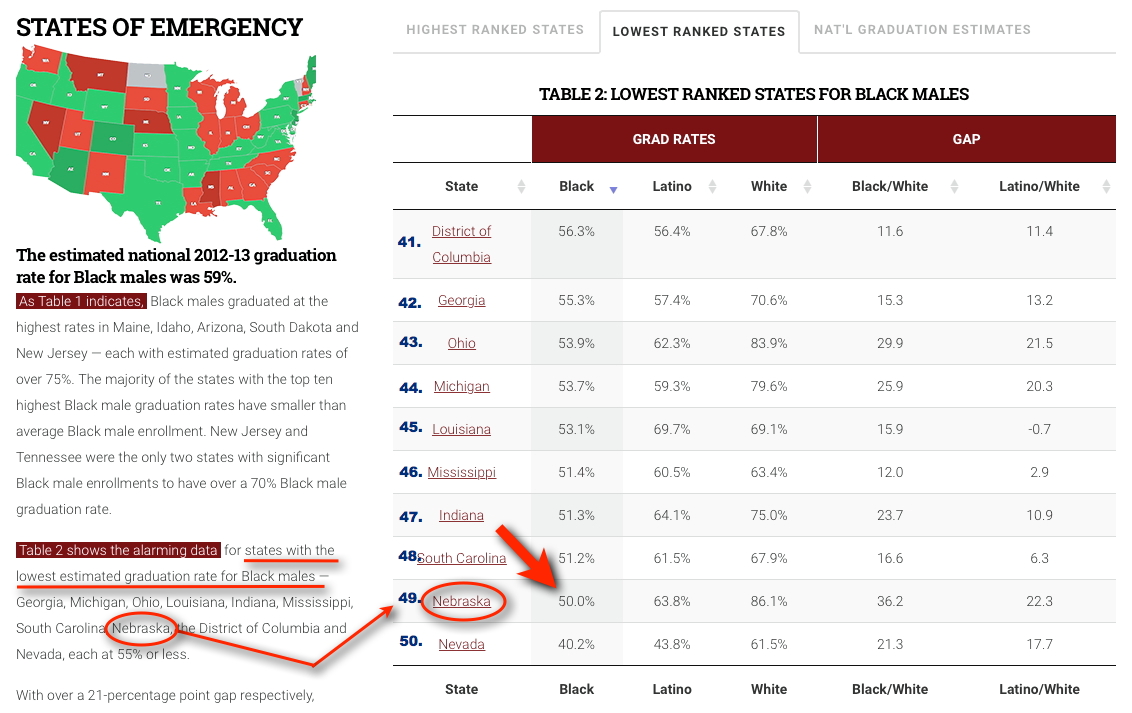
6. The overwhelming majority of K-12 public school teachers are White and female (let that ruminate for a minute): Over 50% of Black males do not graduate from high school, with so many Black males retained (held-back) from promotion or graduation, with more Black males being suspended from school or placed in "special education programs, and with so many Black males becoming incarcerated, the educational opportunities for Black males has been "inhospitable," as stated by Christina Hoff Sommers, author of "The War Against Boys" (2000, Simon & Schuster). As validated by the following exhibit, Nebraska has next to the lowest graduation rate for Black males in the U.S.
CLICK IMAGE TO ENLARGESource: Schott Foundation for Public Education http://blackboysreport.org/national-summary/state-graduation-data/
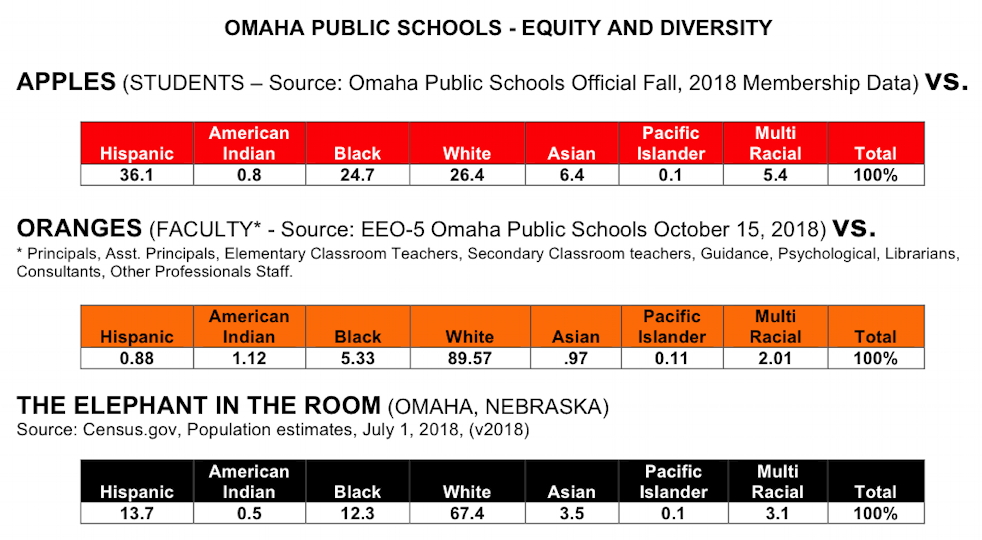
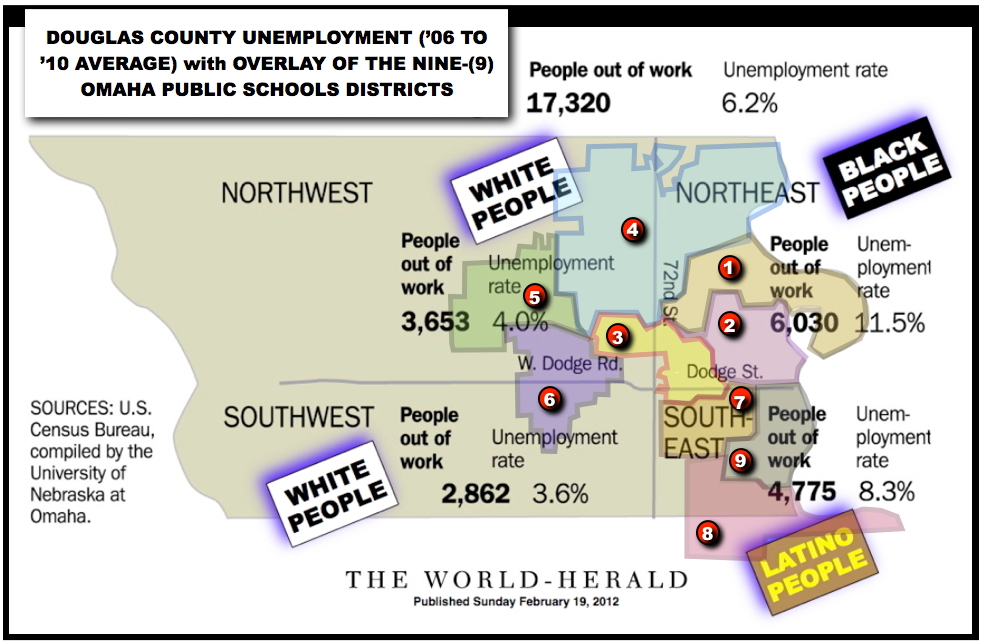
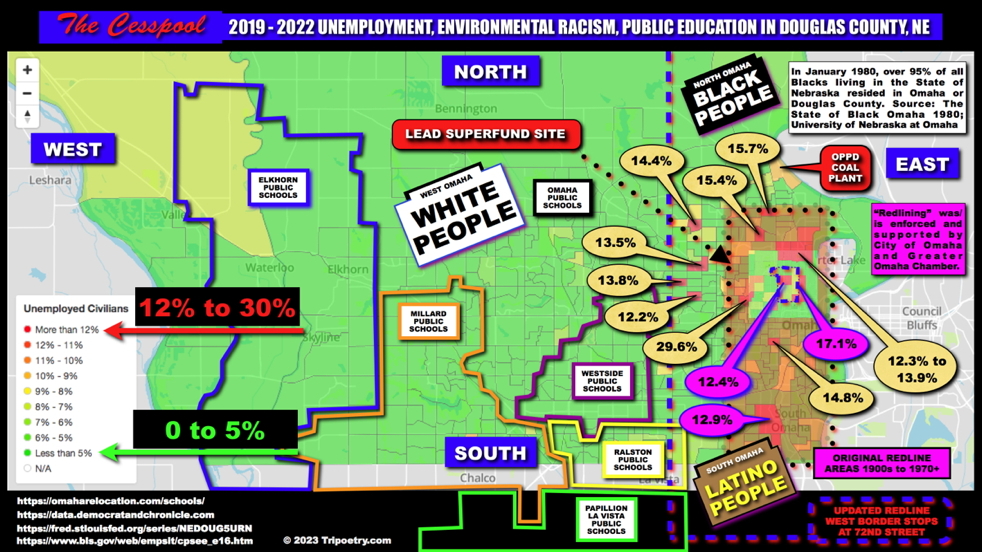
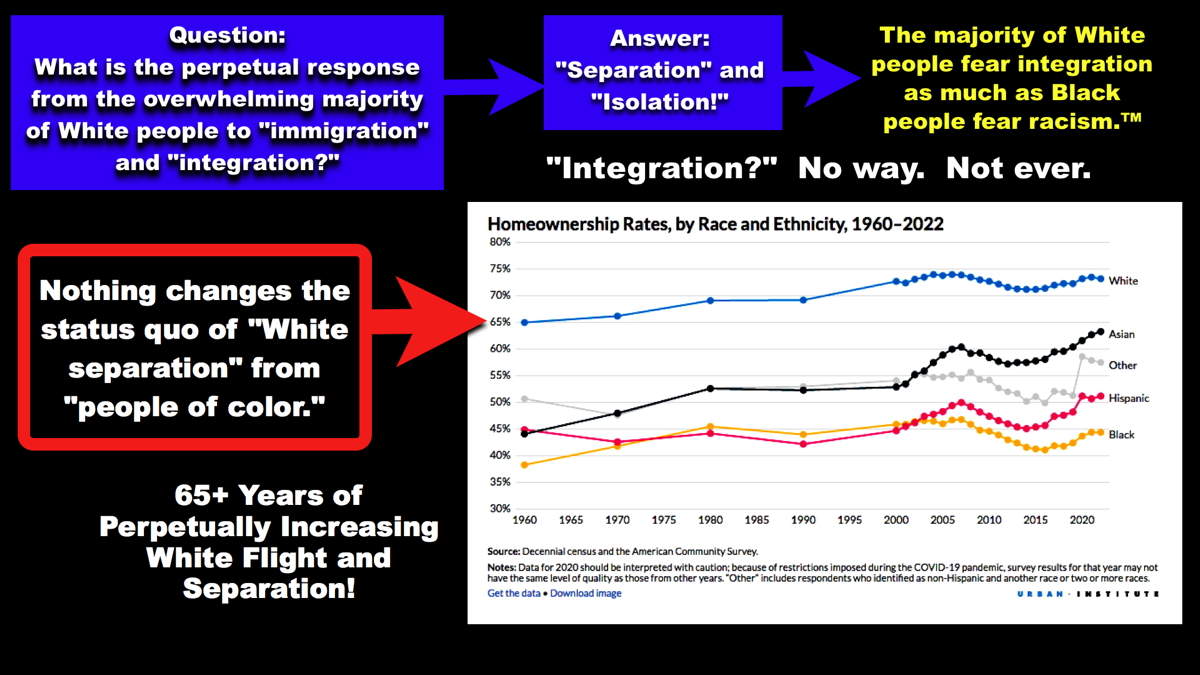
7. At Omaha Public Schools everything is inequitably defined by race, especially student enrollment, faculty, and school boundaries (real estate).
- https://www.usccr.gov/pubs/docs/OmahaFinal.pdf
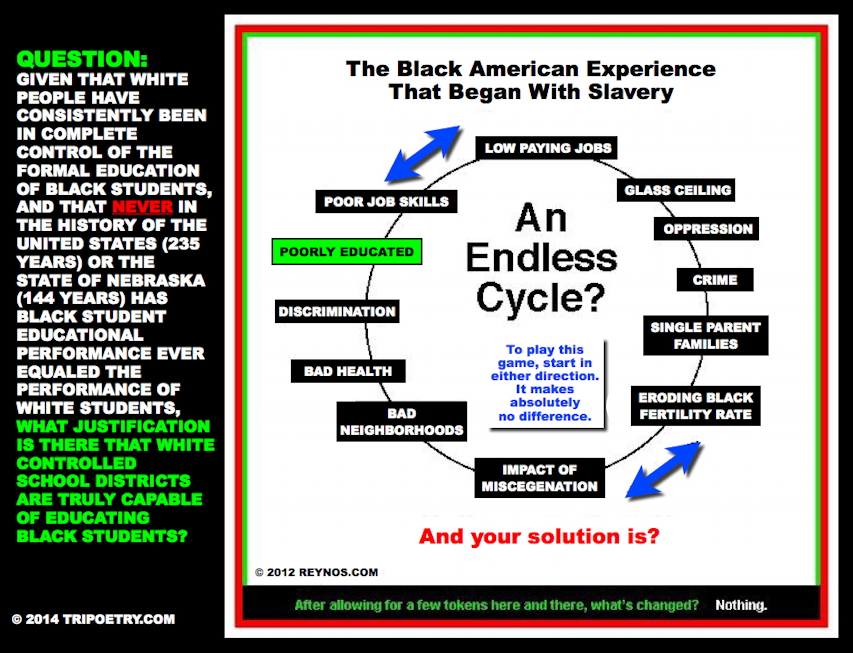
QUESTION: Given the endless cycle of Black poverty and oppression, and that White people have consistently been in complete control (governance, funding, location of schools, resources and materials, selection and certification of teachers, curriculum, etc.) of the formal education of Black students, and that NEVER in the history of the United States (243 years) has the educational performance of Black student ever equaled the educational performance of White students, what justification is there that White controlled school districts are truly capable of educating Black students? ANSWER: There is no justification (or evidence) that White controlled school districts are truly capable of educating Black students.
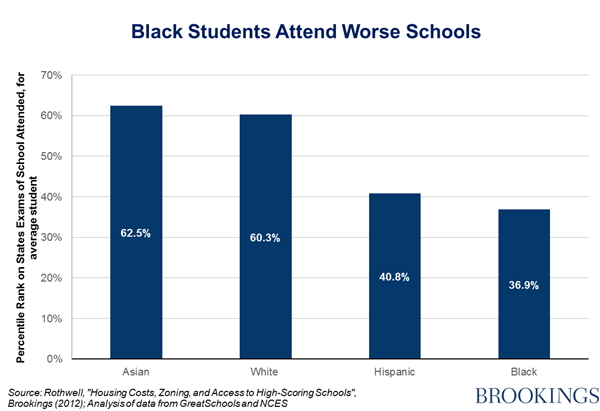
U.S. public school systems remain highly segregated by race and economic status: Black students make up 16 percent of the public school population, but the average Black student attends a school that’s 50 percent Black. As reported by Jonathan Rothwell, the average Black student also attends a school at the 37th percentile for test score results whereas the average white student attends a school in the 60th percentile:
As researched and published by the Brookings Institution, there are significant race gaps in nearly every conceivable social and economic dimension, including: incarceration, early learning, parenting, schooling, attitudinal racism, employment – and more! At best, progress has been extremely limited or non-existent, because all aspects of public and private education are perpetually and primarily based on politics, race, and sex.
CASE IN POINT . . .
AND THEN THERE'S THIS . . .
In summary, given the actual "value" of the character and scope of work in the marketplace, the overwhelming majority of K-12 teachers are overpaid. Of course, you can disagree, but keep in mind, as your property taxes continue to increase to fund school construction and maintenance, and your taxes increase to raise teacher pay, etc., a traditional "home school" environment or an online home school is achieving the same (or better) result for free or at considerably less cost.
Given the constant growth in technology, eventually, there'll come a time (soon) when your "care giver" will insert a datachip "containing all human knowledge" into your child's brain, perhaps at birth. Clearly, this action would negate the need for K-12 public education as we know it now, and relegate public education as nothing more than a social activity. Think about it.
Yes, people who desire a more challenging work environment should leave the K-12 public school teaching profession, because K-12 public education is vastly over-rated, and based on the character, scope, and actual complexity of work performed, teachers are over-compensated - and as broadcast by Bill Maher below, it's even worse at colleges and universities.
RECOMMENDATIONS:1. As ruled by the U.S. Supreme Court, "Separate but equal" does not work, it's illegal, and was overturned; discontinue the archaic racist and sexist educational practices sustained by State Rights governance of K-12 public education.
2. Establish a federally mandated educational "congress," composed of members from all fifty-(50) states and all U.S. Territories. Its mission: To create a synergy of uniform curriculum and eduational standards for all K-12 public schools, with the objective to provide equal access to the same knowledge, the same curriculum, the same materials, the same equipment and technology, and the same opportunity to achieve academic success.
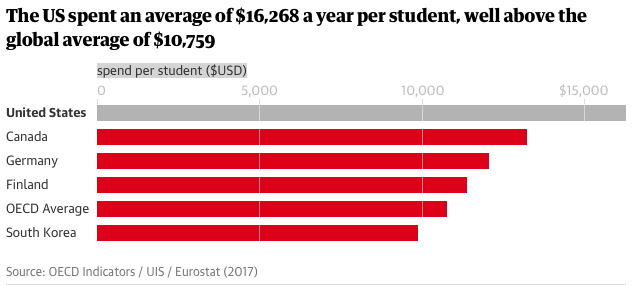
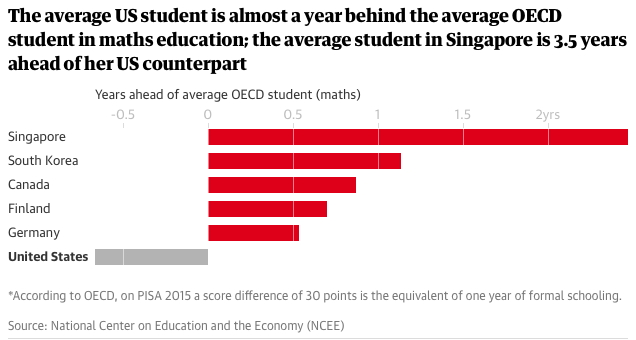
3. Establish that the U.S. will consistently lead the world in student educational performance. As reported by the Organization for Economic Cooperation and Development (OECD), the U.S. spent an average of $16,268 a year to educate a pupil from primary through tertiary education versus the global average of only $10,759. Sadly, the average US student is almost a year to 3.5 years behind the average OECD student in math. Clearly, the U.S. spends more on education, but (again) at a much higher cost-benefit ratio and with significantly less return on investment.
4. Establish that teacher compensation is entirely based on student educational performance. Period.
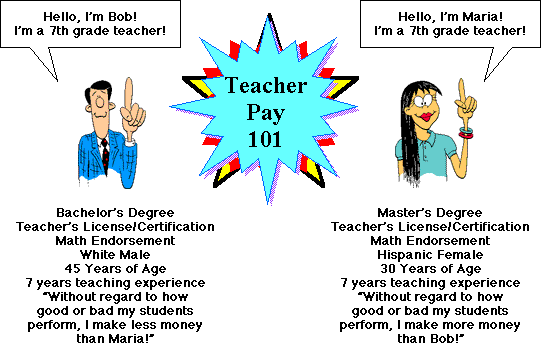
Given that teachers cannot deviate from the established curriculum, that teachers in all grade levels must teach the same curriculum, and perform the same character and scope of work, why are teachers paid differently?
In the clear majority of public school districts, teachers are compensated through salary schedules that reward teachers based on (a) the kind of educational degree (BA, MA, Ph.d, etc.) they hold, including the total number of semester hours (i.e., BA+15, BA +30, MA +15, MA +30, etc.), they have acquired; and (b) their total number of years of teaching experience. How well or poorly a teacher performs is NOT a routine consideration for advancement of teacher pay.
FACT: Teacher performance (actual success at achieving student educational objectives) is NOT a consideration for advancement on teacher salary schedules.; Therefore, why are teacher salary schedules rewarding teachers for factors (individual continuation of education and longevity) that do NOT and can NOT have any impact on the educational performance of students?
Equally importantly, should better performing teachers, even though they teach the same subjects (curriculum), at the same grade level, with the same amount of experience, be paid similar to lower performing teachers? Is that . . . fair? There's absolutely no correlation between student educational performance and teacher compensation.
5. Establish that anyone (without a criminal history, record of child abuse, etc.) with validated professional expertise in a designated area of approved curriculm and related educational standards can be a "teacher."
6. Establish that a teacher is NOT defined as someone who acquired a state-mandated teaching certificate or functions as a member of an incestuous group of academicians and their unions and political lobby, but a teacher is someone who can consistently meet or exceed objectives for student educational performance.
7. Establish "hierarchical performance standards" with corresponding market-based competitive financial incentives.
A linear, objective, fact-based assessment of K-12 public school teachers using the same point-factor "job evaluation" tools common to human resource professionals as used in other industries is not used; and now you know why!
Please, contact me here, or call me at 402-418-8424