To download profile, click here.
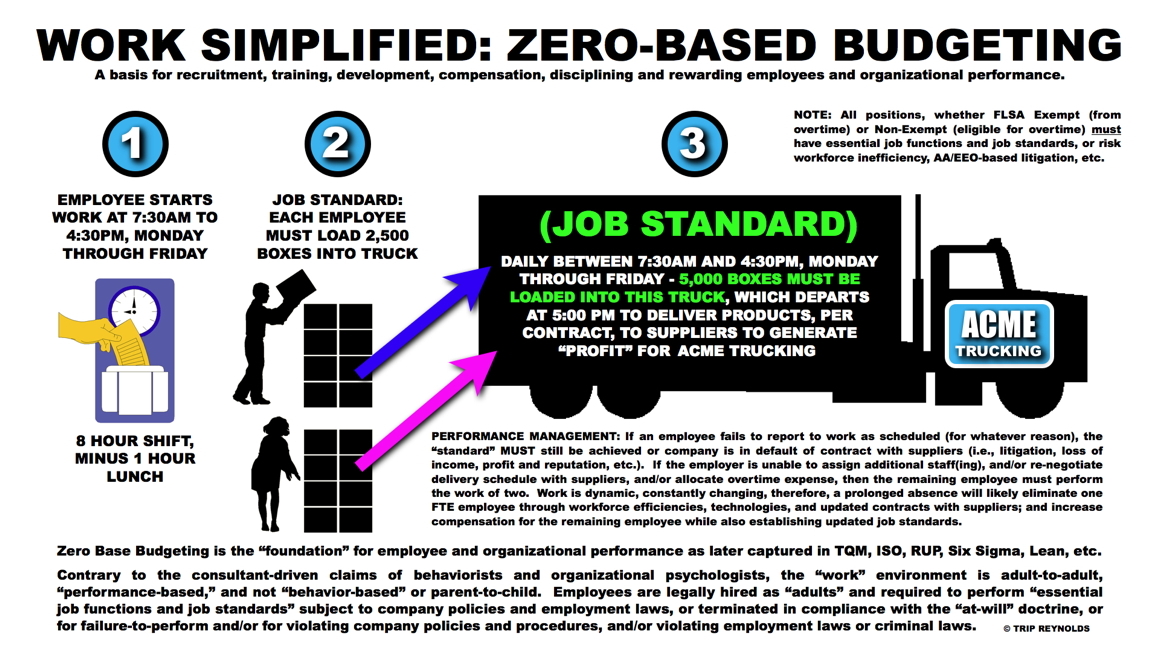
FOCUS: Hire employees who validate, before hire, they can consistently perform the "job standard."
• Robust
hands-on experience managing recruitment advertising, both traditional and online.
I've personally designed and placed display
advertisements in local, regional, national, and
international print or broadcast media and online (Careerlink.com, Monster.com, Careerbuilder.com, Indeed.com, etc.). Plus, I have decades of experience designing and placing
non-recruitment classified ads. An actual recruitment
display ad I designed and placed in the Denver post is
presented at right.
• For more than two decades, I've designed or redesigned employment
applications and employee handbooks for each of my
employers in compliance with employer policies and
employment law. Employment applications and employee
handbooks are available upon request.
• Conducted
recruitment and selection in compliance with human capital objectives, including planned retention, outsourcing, and reduction-in-force.
Utilized diverse civic and cultural groups
to achieve targeted recruitment objectives, including: Women's Employment and Education (State of Colorado, City of Denver, etc.), Bayaud Industries
(mental and physical disabilities), United States
military (Disabled American Veterans, Fitzsimmons Army
Medical Center, Veterans Administration), Mayor's office
of Employment, Urban League, NAACP, Hispanic Chamber of
Commerce, Servicios De La Raza, Inc., and dozens of
colleges and universities.
• Examples of selection assessment tools consistent with the Uniform Guidelines on Employee Selection are presented below:
• At the City of
Dallas: Managed the selection validation team [one
FLSA exempt supervisor and three FLSA exempt selection
analysts] in the design and management of selection
instruments in compliance with the Uniform Guidelines on
Employee Selection for all non-Civil Service
positions.
Trained management and staff on use and related employment law.
Recruitment & Selection-UNACCEPTABLE.xls (for PDF, click here)
Recruitment & Selection-ACCEPTABLE.xls (for PDF, click here)
"As Manager of
Employment, (Trip) demonstrated many innovative
approaches to staffing challenges creating more
effectiveness within his organization. I can honestly
say that I find Trip to be a very bright and capable
individual and would recommend his talents to anyone
needing a strong human resources individual."
Jay Velinder, Executive Vice President, Talent Tree
(Staffing Services)
|

Click the above advertisement to view additional
ads.
• At Denver
Community Federal Credit Union: Trained senior management
on selection validation techniques to expedite the
assessment and elimination of candidates.
Specific
example: First-line supervisors and their immediate
management were not trained in employment law and,
appropriately, were concerned about scope of acceptable
inquiries to be made of candidates, in particular,
tellers.
What did I
deliver: Consistent with the Uniform Guidelines on
Employee Selection, I trained management on various
employment related laws, and also introduced the
following assessment question to be asked of all
candidates applying for cash-handling positions:
"While working at a teller station, a credit union
member asks you for a money order for $12.50. The
credit union member gives you a twenty-dollar bill.
The cost of a money order is $2.00. How much change
should you return to the credit union member?" Line
management acknowledged being empowered with a job
related skill assessment that objectively enhanced
their ability to select quality candidates.
• Used CBI, NCIC
and other tools to conduct background checks.
• Managed internal
temporary help services; plus, wrote RFPs and managed
staff in supervision of contracts for temporary help
services with external vendors such as Kelly, Snelling,
Volt, Talent Tree, executive recruiters (both retained
and contingency search firms).
• At National
Jewish Center:
Managed a 10,000 to 15,000 line bulk space
display advertising contract.
Managed an annual applicant volume of
4,000 and 100 placements via a temporary employment pool;
recruited foreign nationals and managed J1, H1 Visa; and
conducted targeted AA recruitment.
Managed the annual screening of over 3,800
applications and resumes.
"I just want
to take this opportunity to thank you for your special
assistance at National Jewish Center. As you are
aware, the legal matter in which we were engaged
required the presentation of a complex set of facts to
a government agency. The manner in which you organized
the facts was very important to the successful outcome
of the case. Since working with you on this project, I
have used the system you engineered successfully in
other situations. In addition to presenting the facts
in an organized, easy to understand fashion, it is a
pleasure to work with a person who maintains their
objectivity and is able to treat "difficult to handle"
people fairly and with concern."
Ann Allott, Attorney at Law, Allott, Engineer &
Makar
"Trip is
straightforward in his demeanor and not afraid to
address a negative situation. He would seek out
solutions instead of fingerpoint. I consider him to
have vision as well as the ability to follow through.
He is honest, articulate and conceptual in his
dealings with my company. He exhibits a 'can do'
attitude with the discipline to get it done. He takes
on the yoke of responsibility and has the drive and
focus to achieve a goal with bottom line earnest. He
is an excellent "people person" and knows his staff
quite well."
John M. Stepien, Regional Vice President,
Nationwide Advertising Service
|
SCHEDULE A SEMINAR
THE SITUATION: You saw an online job posting, and if provided an opportunity, you're confident you can prove (validate) that your skills, knowledge and proficiencies match-up item-per-item with all of the posted essential job functions and related position requirements. So, you took 30-to-60+ minutes of your valuable time to accurately and honestly apply online for this position. Then, you get the following standard, perfunctory response from the employer:
"We've decided to
consider other candidates
with skills and experience
more closely aligned
with our interests."
Q: Did the employer call you and ask any questions?
A: No.
Q: Did the employer require you to complete a "Selection Assessment Exercise" to validate if you can perform the posted "essential job functions" as well as or better than their actual employees?
A: No.
Q: Did the employer contact any of your references to validate if you possess the skills, knowledge, and proficiencies actually performing the posted essential job functions?
A: No.
Q: Is it possible the employer intentionally excluded your candidacy because of your age, race, sex, creed, national origin, disability, pregnancy, veteran status, sexual identity or sexual designation, or other factors that have absolutely nothing to do with performing the posted essential job functions?
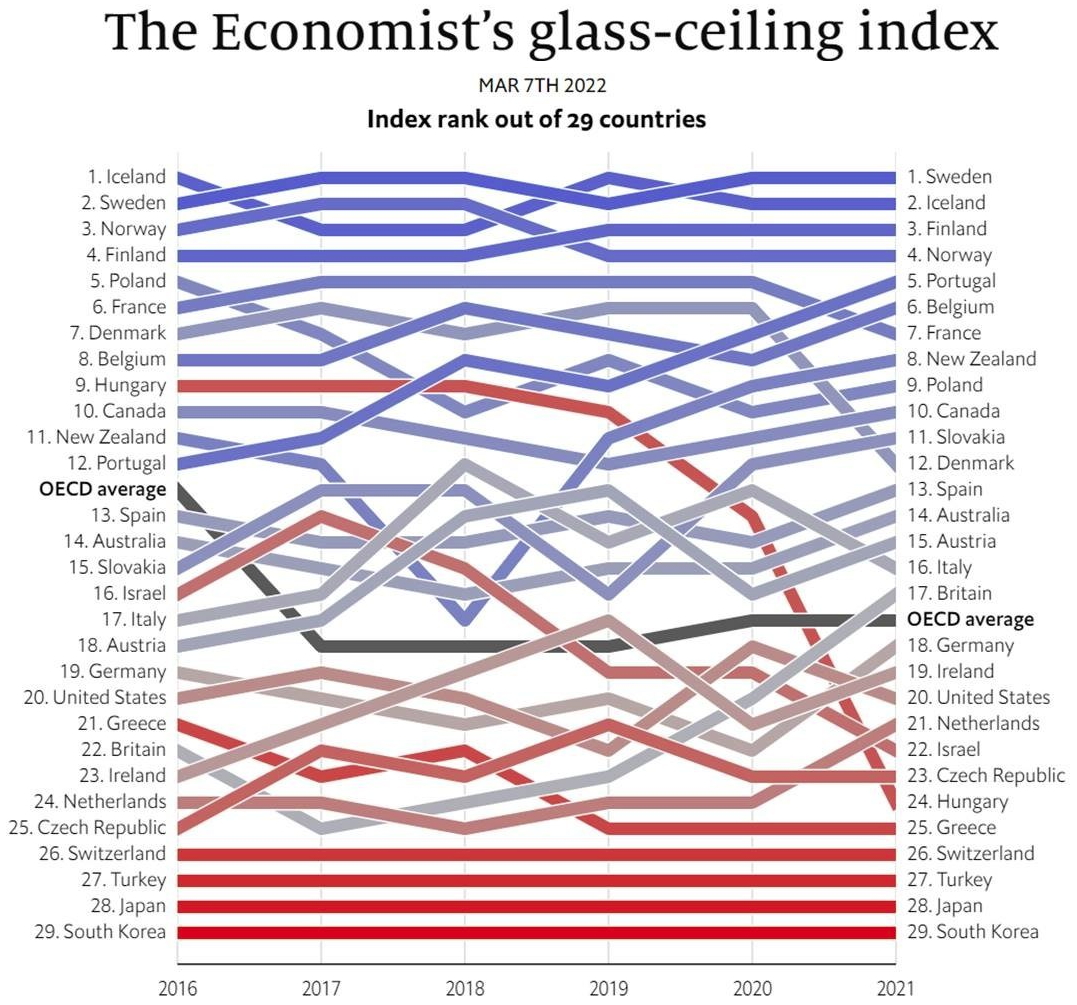
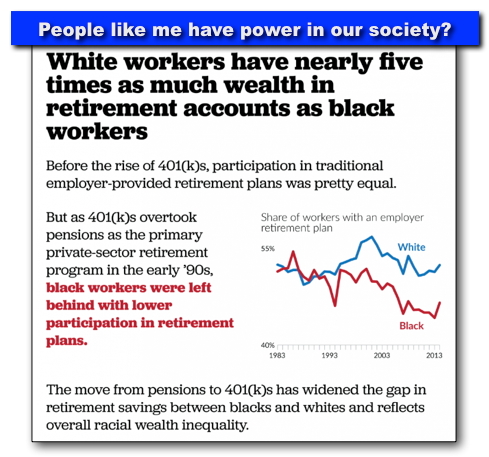
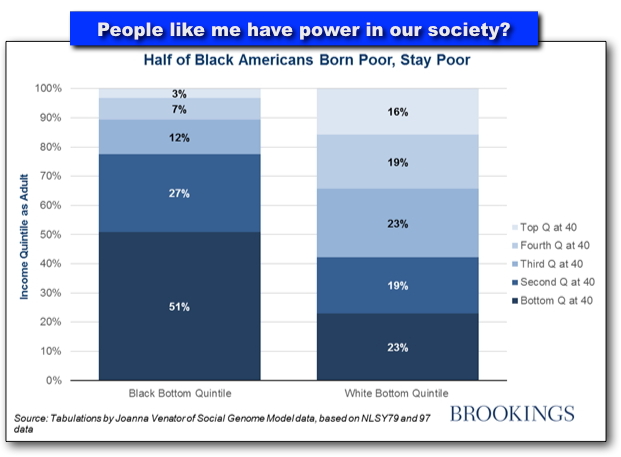
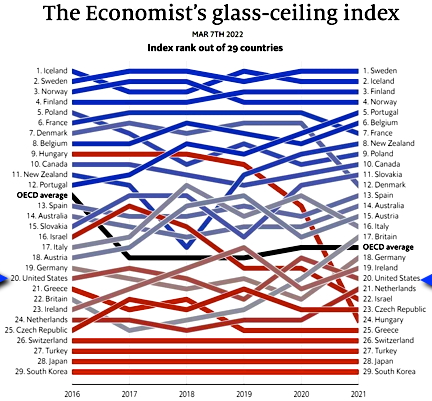
A: Possibly. Probably. Who knows? Here's what we do know: the "Glass Ceiling" has not changed. The wage gap between women and men who perform the same job has not changed. The income gap between White people and Black people has not changed.
Consequently, you believe the employer made absolutely no effort to validate your proficiencies; and yes, you're probably right.
This is an extremely candid, "real world" seminar on what actually happens between your career expectations and your existing or potential employer's "at will" assessment of your value as an employee!
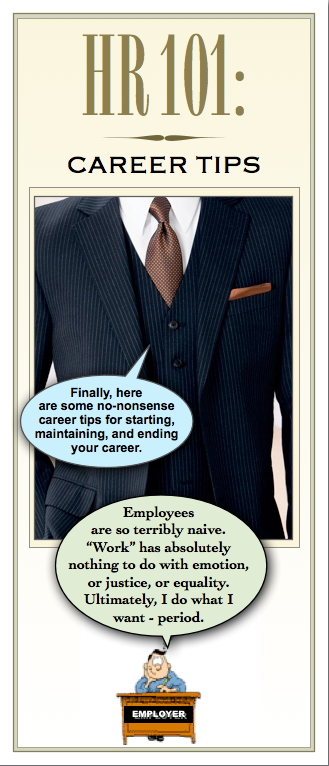
Click image above to review brochure.
|
| |
|
|
THE FOLLY OF BOGUS HR CERTIFICATIONS |
Just like many employers have literally jumped on the bandwagon to re-name AA/EEO/ADA as the Johnny-come-lately-social-justice-warrior compliant "Diversity, Equity, and Inclusion" or DEI, many employers have suggested or required HR professionals to possess a certification from the Society for Human Resource Management (SHRM) as a pseudo-validation of subject matter expertise in human resources, which is ridiculous, or worse given that the cost to acquire such certifications typically exists as a barrier to minorities and women, and the acqisition of such certification does not increase the compensation (hourly or annual salary, per diem, etc.) of the incumbent. Consider the following facts:
>> SHRM has been in existence since 1948 and the "Glass Ceiling" and sex and/or race based salary inequities remains just as vibrant, just as discriminatory in 2022!
>> SHRM has been in existence since 1948 and the cost of health care has not been reduced and will continue to increase!
>>
Employers continue to violate FLSA, ADEA, and EEO while SHRM fattens its financial pockets with bogus certifications that have absolutely no tangible compensatory value in the marketplace.
SHRM primarily functions to lobby governmental bodies regarding workplace law and industry practice, but SHRM has absolutely no control, impact, or ownership of employment law or how employers implement, or more importantly, how employers unilaterally elect to interpret employment law. Conversely, the AFL-CIO, NEA, AFT, "big pharma" and other lobbying entities have always held significantly greater influence on federal, state, and local government than SHRM. At best, SHRM's pseudo-certifications function as guidelines, but without any enforcement or control of how employers actually manage human resources.
SHRM-CP or SHRM-SCP - Regrettably, its consistently, repeatedly been my practice to clean-up major mistakes (salary inequities, chaos in employee relations, EEO claims, etc.) made by persons with such designations. For example, I conceived and installed a "Job Offer Tool," to eliminate salary inequities created by persons with SHRM designations. In summary:
(1) these designations do not function as relevant between industries (manufacturing SKAs are not relevant in IT, etc.), and certifications NEVER supersede employer policy or directives from senior management;
(2) these designations do not validate HR/OD proficiencies against an employer’s actual policies, procedures, essential job functions, and job standards, and therefore, are not BFOQs, and are not relevant;
(3) these designations are incestuous to the exclusive benefit of SHRM as validated by the fact of the perpetual existence of the “glass ceiling,” the perpetual increase in health benefits, and SHRM’s corresponding failure as a lobbying entity; and
(4) Proudly but humbly, my subject matter expertise in HR/OD exceeds any SHRM certification.
|
| |
THE FOLLY OF BEHAVIOR-BASED RECRUITMENT TOOLS |
| |
As a seasoned HR pro I've conducted thousands of recruitment campaigns, which includes conducting retained search for hard-to-fill or high priority positions. Given the expense and time required to conduct an efficient recruitment and selection campaign, frankly, there should be an expectation the recruitment process is bereft of non-work-related assessments, especially behavior-based assessment tools which consistently reek of sexual, racial, cultural, and other forms of discrimination. The "work" is not an emotional event, but is solely function-based, non-emotional in design and purpose, and "assessed" by extremely linear measures of objective performance - how much, how little, when, where, etc. Consultant-driven psychological tools like the Myers-Briggs Type Indicator (MTBI) did not, do not create, innovate, or improve, but only bottleneck (i.e., discriminate and oppress) the creative genius and business acumen of individuals, especially women and minorities.
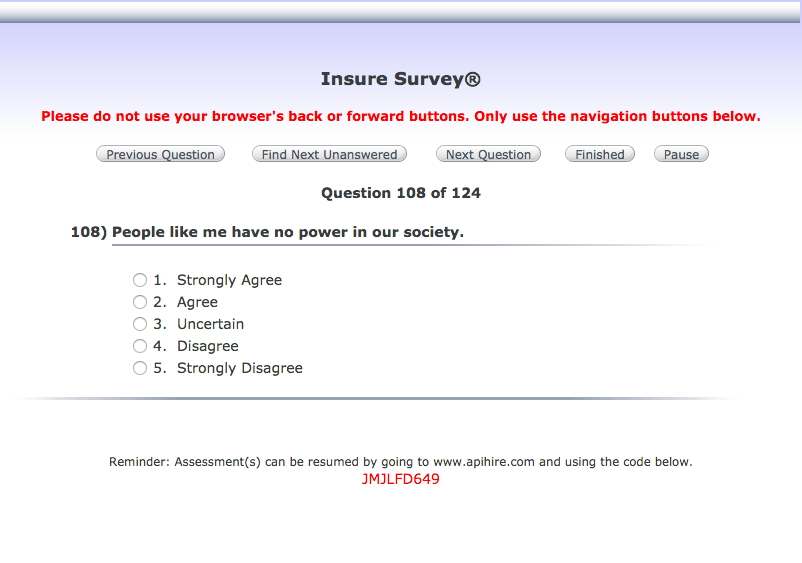
For example, the Johnston Assessment (below) asks questions that have absolutely nothing to do with the actual essential job functions to be performed by the position (accountant, product manager, software engineer, chemist, human resource director, etc.); questions such as, "People like me have no power in our society?"
Think for a minute, as represented by the exhibit at right, how exactly is an individual in a protected class (minorities, women, disabled, etc.) supposed to honestly interpret and respond to this question without being "assessed" for "feeling" oppressed or depressed, or worse, being angry or in denial about their place in "our" society?
Plus, given that YOUR RESPONSE to the statement at right has absolutely nothing to do with the posted essential job functions, how exactly is your response going to be "assessed" for or against your candidacy? And why?
Well?
|
 |
Think for a minute, as represented by the exhibits below, given the history and perpetual status of the overwhelming majority of Black people in the United States, how exactly is an individual in a protected class (minorities, women, disabled, etc.) supposed to honestly interpret and respond to the aforementioned question without being "assessed" for "feeling" oppressed or depressed, or worse, being angry or in denial about their place in "our" society?
 |
 |
Likewise, given the history and perpetual status of the overwhelming majority of women in the United States, how exactly is a woman supposed to honestly interpret and respond to the aforementioned question without being "assessed" for "feeling" oppressed or depressed, or worse, being angry or in denial about her place in "our" society? Or perhaps, the real purpose of this question is to make sure women and minorities "know" their pre-determined place in society.
|
 |
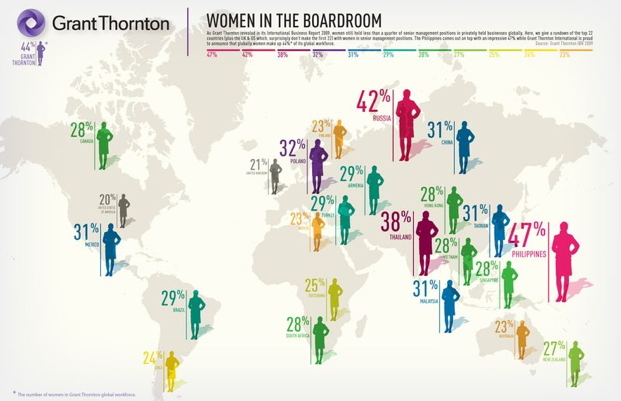 |
Women are heavily underrepresented in high-level leadership positions, only 6% of CEOs at S&P 500 companies are women. Why is there a greater percentage of women in corporate and governmental boardrooms in Russia (42%), China (31%), Canada (28%), Australia (23%), Brazil (29%), Mexico (31%), and throughout other countries in Europe and Asia than in the United States (20%)? |
STATEMENT: People like me have no power in our society.
What does the aforementioned statement have to do with the actual "job," or asking similar questions like:
> To have real power in our society your employer must pigeon-hole your entire existence, including non-work related values and interests, into a consultant-driven, predetermined, pseudo-psychological assessment that has absolutely nothing to do with the actual performance of the posted essential job functions.
_ Strongly agree
_ Agree
_ Uncertain
_ Disagree
_ Strongly disagree
> To have real power in our society you cannot be a woman.
_ Strongly agree
_ Agree
_ Uncertain
_ Disagree
_ Strongly disagree
>To have real power in our society you cannot be a minority.
_ Strongly agree
_ Agree
_ Uncertain
_ Disagree
_ Strongly disagree
> To have real power in our society you must be lazy and let the government take care of you.
_ Strongly agree
_ Agree
_ Uncertain
_ Disagree
_ Strongly disagree
> To have real power in our society you cannot be physically disabled or mentally disabled, or appear to be.
_ Strongly agree
_ Agree
_ Uncertain
_ Disagree
_ Strongly disagree |
|
> To have real power in our society you must have progressive values.
_ Strongly agree
_ Agree
_ Uncertain
_ Disagree
_ Strongly disagree
> To have real power in our society you must adopt a LBGT+ lifestyle.
_ Strongly agree
_ Agree
_ Uncertain
_ Disagree
_ Strongly disagree
> To have real power in our society you must be a social justice warrior.
_ Strongly agree
_ Agree
_ Uncertain
_ Disagree
_ Strongly disagree
> To have real power you must be morbidly overweight or obese like the overwhelming majority of people in our society.
_ Strongly agree
_ Agree
_ Uncertain
_ Disagree
_ Strongly disagree
> To have real power in our society you must be White and male and have a truck load of money.
_ Strongly agree
_ Agree
_ Uncertain
_ Disagree
_ Strongly disagree |
• Reynolds has robust experience designing "performance based" selection assessment instruments and related tools in compliance with the Uniform Guidelines on Employee Selection (criterion-related, content, and construct validity).
>> Evidence of the validity of a test or other selection procedure by a criterion-related validity study should consist of empirical data demonstrating that the selection procedure is predictive of or significantly correlated with important elements of job performance.
>> Evidence of the validity of a test or other selection procedure by a content validity study should consist of data showing that the content of the selection procedure is representative of important aspects of performance on the job for which the candidates are to be evaluated.
>> Evidence of the validity of a test or other selection procedure through a construct validity study should consist of data showing that the procedure measures the degree to which candidates have identifiable characteristics which have been determined to be important in successful performance in the job for which the candidates are to be evaluated.
Unlike the Uniform Guidelines on Employee Selection, which is specific to the actual work performed by the candidate/employee, the Johnston Assessment (JA) is behavior based, overtly subjective, and does not assess the knowledge or proficiency actually required to perform the posted essential job functions. Keep in mind, the "relationship" between the employer and employee is not behavior-based, but performance-based; it's an adult-to-adult relationship, not parent to child. "Employment" is a professional relationship, where professional work-related standards of courtesy, congeniality, diplomacy, and sometimes, an employment contract-defining morals clause are inherent job standards, but bereft of any actual emotional attachment. Why?
In this professional work environment, your employer does not monitor how you behave, as if you’re a child. For example, when a minor child throws a tantrum and physically hits another, the child is admonished, possibly suspended. Conversely, an adult who physically hits another adult has committed an assault and is subject to immediate termination for violation of company policy, and subject to civil litigation and criminal prosecution. Your employer is not your parent to coddle YOU, or to advocate or support YOU as a friend.
JA and other behavior-based assessments often require the candidate to select from only 1 or 2 choices, "the least objectionable choice," when an actual and better unlisted “work related” option(s) exist beyond the scope of the question. Forcing a candidate to repeatedly select the least-worst option, an option that has absolutely nothing to do with the performance of the actual essential job functions, does not validate any aspect of the candidate's proficiency or subject matter expertise in "performance" of the essential job functions. JA and other behavior-based assessments do not function as a linear assessment of work-related “performance,” but do function as a consultant-driven behavior-based assessment at the expense of the employer and at the detriment of the candidate.
QUESTION: Why would an employer waste time conducting non-work-related "behavioral assessments" only to subsequently discover the candidate lacks subject matter expertise to perform (not behave), but to perform the actual essential job functions?
OBSERVATION: It can be perceived as somewhat disingenuous to suggest "expertise" in recruitment and selection when the validation of a candidate's skills, knowledge and proficiencies is prolonged, protracted, or even worse, indecisive.
FACT: In the absence of the work being performed in an actual medical setting and/or by a licensed medical professional: (1) neither the employer or the immediate hiring authority is a licensed psychiatrist or psychologist, and (2) the essential job functions do not require the use of psychiatric or psychological skills, knowledge, or proficiencies. Accordingly, due to considerable case law, during the past forty-(40) years the overwhelming majority of employers abandoned behavior-based assessments to avoid claims of discrimination and potential litigation. Unfortunately, some employers, and consultants out for a fast buck ignore or forget the past, especially when doing so maintains the "status quo." The transition from AA/EEO/ADA to the Johnny-come-lately "DEI" space has created a bunch of pseudo-DEI experts who literally don't have a clue about "real world" DEI, which as validated by EEO-1s and EEO-4s, except for a few tokens, nothing has changed:
The New York Times: Faces of Power: 80% Are White, Even as U.S. Becomes More Diverse
https://www.nytimes.com/interactive/2020/09/09/us/powerful-people-race-us.html
Consistent with the Uniform Guidelines on Employee Selection (criterion-related, content, and construct validity), my pre-employment "work-related assessment" requires the candidate to validate subject matter expertise actually "doing the work" in three specific dimensions: (1) subject matter expertise and compliance; (2) presentation; and (3) goal setting and achievement. The aforementioned process enables the recruiter to immediately filter-out candidates who lack subject matter expertise. For example, in compliance with the UGES, I require candidates for a "recruiter position" to complete the following pertinent "work-related" assessment; all of which can occur when the candidate submits an online job application via the employer's HRIS/ERP applicant tracking portal or through third-party online vendors such as Indeed.com:
Dimension 1: (Knowledge and Compliance): Properly categorize and sort the attached Excel spreadsheet of employee demographic data in compliance with EEO-1 reporting, to include separate columns for percent of workforce and numerical totals for each demographic. Plus, based on the EEO-1 report, suggest if and where the employer might be at-risk for being subject to a Conciliation Agreement with the OFCCP.
Dimension 2: (Presentation): Submit a five-(5) minute video presentation both discussing and showcasing an actual ADA workplace accommodation, to include: type of disability; all related expenses; steps to achieve implementation; coordination with third-party entities, etc.
Dimension 3: (Goal Setting and Achievement): Identify the salary inequity in the attached Excel spreadsheet, and detail specific steps to be taken to correct the inequity, the projected amount of time to correct the inequities, and the steps and time required to prevent subsequent inequities.
Noteably, an assessment based on whether or not "People like me have no power in our society," is not relevant, and most importantly, the employer is not wasting time and money conducting non-work-related "behavioral assessments" only to subsequently discover the candidate lacks subject matter expertise to perform (not behave), but to perform the actual essential job functions.
In summary, with regard to developing and executing a successful recruitment and selection campaign, please keep in mind:
1. Reynolds has robust experience designing selection assessment instruments and related tools in compliance with the Uniform Guidelines on Employee Selection (criterion-related, content, and construct validity).
2. Reynolds promoted 60% of all employees who immediately reported to him, and he's never terminated any of his reports for cause.
3. Reynolds has conducted thousands of recruitment campaigns and hired thousands of employees in compliance with the UGES, and has never terminated anyone he's hired for cause.
|
|
RECRUITMENT-BASED "TEAM BUILDING" |
To download profile, click here.
It had long been the
policy of the Denver Post to only run recruitment
advertisements for individual employers, which enables
the Post to make more money. As Vice President of Human
Resources for Denver Community Federal Credit Union
(DCFCU) I was immediately responsible for employee
recruitment. Unfortunately, when most people think about
financial service employment the first thing that comes
to mind is the "b" word or "bank." In this regard, even
before being hired by DCFCU, I observed that local banks
had consistently placed weekly recruitment display
advertisements, but credit unions never place the money
ads that grab the most attention. Even the local chapter
of the credit union lobbying association did not promote
credit unions as a "source for financial services
employment."
Therefore,
I proposed a recruitment strategy to the
President/CEO of DCFCU who put the success or
failure of my campaign solely on my back. I
conceived two recruitment campaigns, one for
DCFCU (at left) as "The Consumer's Choice,"
and another where I contacted peer credit
unions with a strategy to promote and "brand" our
financial institutions as "The Source for
Financial Services Employment!" I designed
display advertisement for both
campaigns. |
|
|
I coalesced area credit
unions on the advantages of supporting each other, and
also acquired the assistance of a professional contact at
the largest single advertiser for the Denver Post -
Nationwide Advertising, Inc. Working together, we were
able to persuade the Post, for the first time in its
history, to run several weeks of composite ads featuring
multiple credit unions! Presented below is the initial
draft I designed, followed by one of the actual ads
placed in the Denver Post.
As
expected, local banks took notice and, for the first time
they had to play catch-up to a credit union recruitment
initiative. Local banks responded with competing ads. I
believe in and practice competing. Some lead, others
follow. |
(BELOW)
"Branding" campaign demo submitted to
area credit unions |
|
 Click the above advertisement to enlarge.
 |

One of the actual
"branding"
campaign recruitment advertisements
|
|
|